Learning

Fundamental vs Technical Analysis: What’s the Difference?

Two schools, one goal. Understanding fundamental and technical analysis helps you decide what — and when — to trade.

Diagram comparing fundamental and technical analysis

There are two main ways to analyse a stock. They answer different questions and work best together.
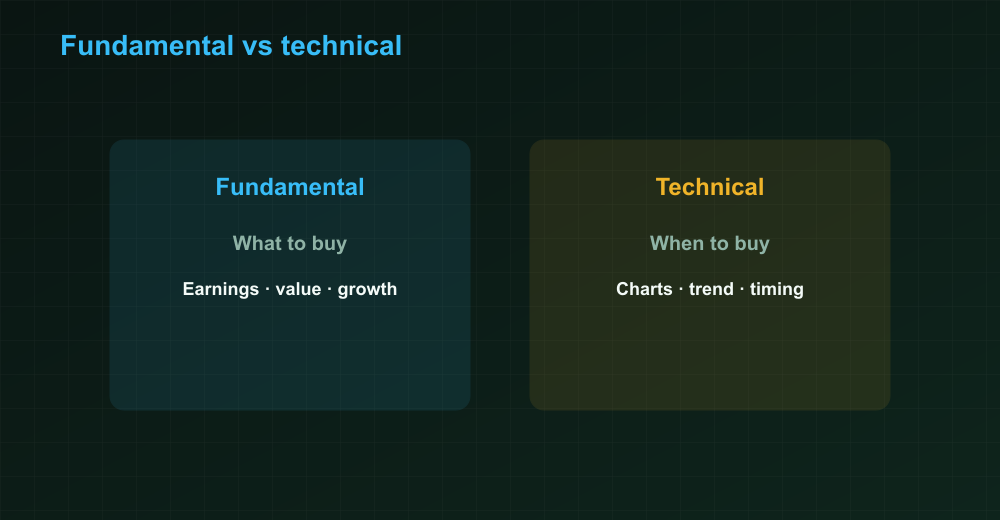
Fundamental versus technical analysis diagram
Fundamental analysis answers what to buy; technical answers when.

Fundamental analysis

Studies the business: earnings, revenue growth, debt, management and valuation. It answers what is worth owning and at roughly what price.

Technical analysis

Studies the chart: price, trend, volume and patterns. It answers when to enter and exit.

Key idea: Investors lean fundamental; short-term traders lean technical. Many use fundamentals to choose and technicals to time.

Pros and cons

FundamentalTechnical
Best forLong-term investingTiming & trading
DataFinancial reportsPrice & volume
WeaknessSlow to signal timingIgnores value

Key takeaways

  • Fundamental = what to buy; technical = when.
  • Investors favour fundamentals; traders favour technicals.
  • The two combine well.
  • Neither predicts the future — both manage probability.

Practise this on ShareRocketPro

Sign up with your name, phone number and a password, get Rs. 10,000 in practice money and trade every NEPSE scrip in our 24/7 practice market — virtual money with no cash value, so zero real-money risk.


Apps — coming soon See NEPSE markets

#fundamental analysis#technical analysis#investing#learning
FAQ

Quick answers.

What is the difference between fundamental and technical analysis?

Fundamental analysis studies the business (earnings, value) to decide what to buy; technical analysis studies the chart to decide when.

Which is better for beginners?

Long-term investors benefit from fundamentals; active traders need technicals. Many beginners start by learning both at a basic level.

Can I use both together?

Yes — a common approach is to pick strong companies with fundamentals and time entries and exits with technicals.

Keep reading

More from the blog.

All articles →
Practise free

Now try it with practice money.

Put this idea to work in the ShareRocketPro app's 24/7 practice market, built from real NEPSE prices, with Rs. 10,000 practice money. Practice money has no cash value — there is nothing to lose but the lesson.